
When consumers become selective, the brands that survive aren’t the ones with the lowest price. They’re the ones with the clearest reason to exist, and a space that proves it.
Something structural is happening in retail. Not a correction, not a cycle. A permanent recalibration of why people walk through a door.
Across Europe and the Gulf, margin pressure is intensifying. Governments are scrutinising supermarket profits. Inflation eroded household purchasing power through 2025, and consumer confidence remains cautious heading into 2026. Yet people are still spending. The shift isn’t from spending to saving. It’s from spending broadly to spending deliberately.
Research from multiple fronts confirms the same signal: the middle is collapsing. Consumers in 2026 are polarising sharply between value-seeking and premium. The brands stuck in between — neither clearly affordable nor clearly worth it — are the ones losing ground. What they’re not doing is disappearing as consumers. They’re becoming more exacting about what earns their loyalty.
Fewer Choices, Higher Stakes
The lifestyle megatrend of “less but better” isn’t an aesthetic preference. It’s an economic and psychological response to a world of too much noise and not enough trust. Consumers are buying fewer things, but they’re buying them with more intention. They want brands that have a clear position, a clear reason to exist, and an experience — physical or otherwise — that validates their choice.
This is visible in the data: brands that leaned into clear identities outperformed in 2025, while those without a coherent positioning struggled to justify their price point, no matter what it was. Emotional connection isn’t soft anymore. Emotionally engaged consumers are significantly more likely to spend more and stay longer with preferred brands.
“The store used to be where a brand sold things. Now it’s where a brand proves it deserves to exist.”
Design Is the Message
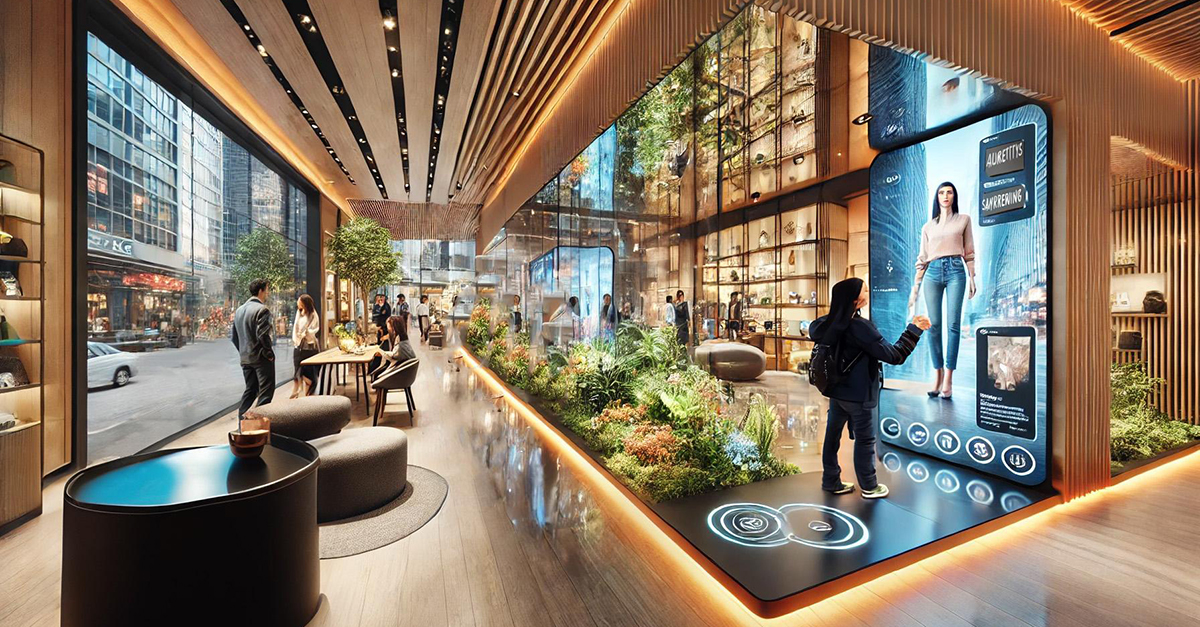
Physical retail is not dying. It’s being assigned a new job. The store is no longer primarily a distribution point. It is a proof-of-concept for the brand’s identity. In Dubai, retail fit-out projects are being built around storytelling through materials, light, and movement, not just product display. In London, Paris, and Athens, flagship formats are being redesigned as experiences first and transactions second.
This is the critical insight: a consumer who enters a store that communicates a brand’s identity clearly through its environment has already started to trust before they pick up a single product. That trust, built through design, spatial logic, material honesty, sensory cues, is what justifies price, drives conversion, and generates return visits. You cannot build it with a discount. You cannot maintain it with a logo refresh.
Retail formats that are winning right now share a common logic: they treat the physical environment as a living argument. Every fixture, every material choice, every circulation path is the brand making its case.
Strategy Before the Brief
The brands failing in this environment are mostly not failing because of bad design. They’re failing because the strategy upstream of the design was missing, vague, or disconnected from what was eventually built. A beautiful store that isn’t grounded in a clear commercial proposition and a real understanding of its customer doesn’t convert. It just photographs well.
The conversation that matters right now is the one that happens before the designer enters the room: Who is this space for? What decision are we asking them to make? What does the environment need to communicate for that decision to feel easy and right? And critically — how will we know whether it worked?
In a market where selectivity is the new default, retailers don’t need better aesthetics. They need tighter alignment between strategic intent and physical reality. That alignment, when it exists, is precisely what consumers recognise — even if they can’t name it. It’s the reason they linger, return, and tell someone else.
The Outcome
Retail formats built on genuine strategic clarity, where the environment, the offer, and the experience are systemically aligned, will outperform those designed in isolation. Conversion improves. Dwell time grows. Return visits compound. The store stops being a cost of doing business and starts being the brand’s most productive asset.
At STIRIXIS Group, we develop the strategic case before design begins, and we stay accountable until performance can be measured. If you’re rethinking a retail format, a flagship concept, or a multi-site rollout, the question worth asking first isn’t “what should it look like?” It’s “what does it need to do, and how will we know it’s doing it?”
That’s a conversation worth having before the brief is written.
