
Designing Residential for Long-term Value
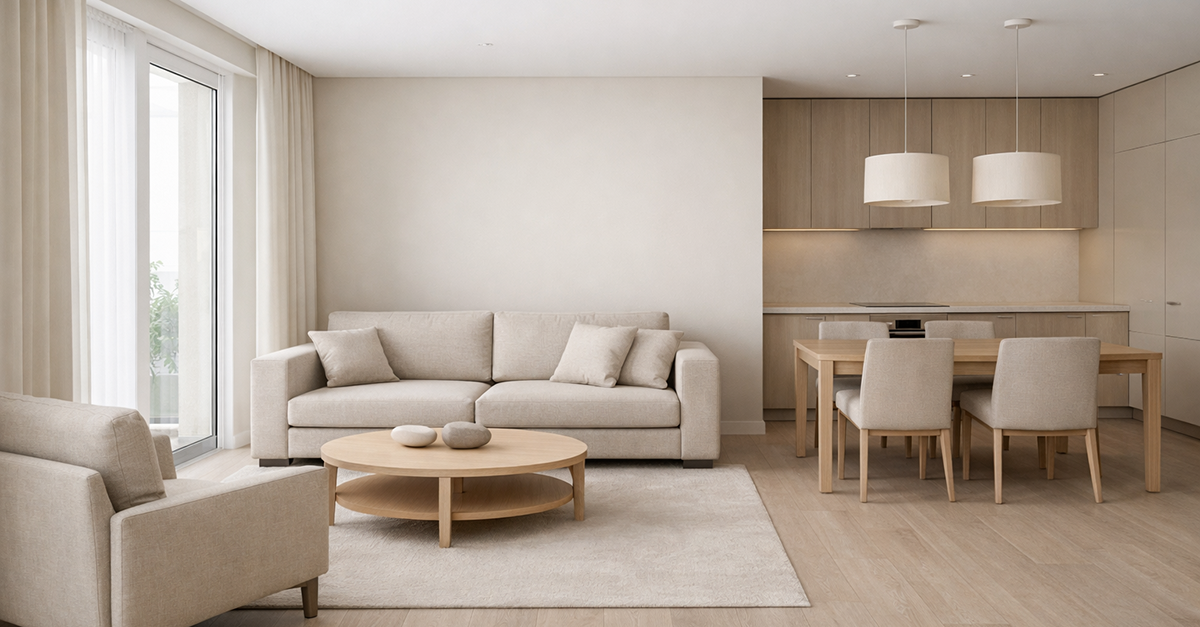
Across many cities, residential environments are changing character. Homes are increasingly designed not for long-term living, but for speed, flexibility, and liquidity. Apartments are acquired as investment assets, positioned for immediate rental, and expected to change hands over time. In this context, permanence gives way to efficiency, and personal expression is replaced by neutrality.
This shift reflects the growing financialization of housing. International investment flows, short-term rental models, and acquisition programs such as Golden Visa schemes have increased demand for properties that are easy to resell, simple to maintain, and broadly marketable. Developers respond rationally. Layouts become standardized, material palettes remain safe, and interiors are designed to appeal to the widest possible audience.
The result is a residential landscape that increasingly resembles hospitality. Spaces are clean, controlled, and visually balanced, yet emotionally distant. They are designed to suit many users over time, but rarely to create a sense of belonging.
“Neutral design reduces risk. Identity protects value.”
The effects of this neutrality extend beyond aesthetics. Environments without identity tend to weaken emotional connection and reduce long-term care. Turnover increases, maintenance standards decline, and developments struggle to build recognition or loyalty in competitive markets. When residential products become interchangeable, competition shifts toward price and location, limiting long-term performance.
A Strategic Question
The challenge is not visual. It is strategic.
Residential projects operate within a broader ecosystem that includes investors, operators, residents, and the surrounding urban context. Designing only for fast absorption or short-term yield overlooks the lifecycle of the asset. Leading international thinking is moving toward environments that balance financial efficiency with real living quality, where flexibility supports adaptation without eliminating character.
The STIRIXIS Approach
At STIRIXIS Group, Residential is approached as a living system rather than a real estate product. Through Strategy Through Execution™, market positioning, user behavior, operational requirements, and investment objectives are aligned into a unified spatial strategy.
The objective is not individual customization, but structured adaptability. Spatial frameworks are designed to support different users over time while maintaining a clear and consistent identity. This allows developments to remain flexible without becoming anonymous.
Such environments encourage longer occupancy, stronger user connection, and better care of the property. At the same time, they strengthen differentiation, support stable rental performance, and build long-term market reputation. Identity, in this context, functions as a performance driver rather than a stylistic layer.
Designing for Lifecycle Value
The future of residential development depends on balancing flexibility with belonging. Investors increasingly seek assets that perform reliably over time, while residents choose environments that support stability and everyday quality of life. Cities benefit from developments that contribute to continuity rather than constant turnover.
Residential should not operate as temporary accommodation. It should function as a long-term living environment that creates sustained value for residents, owners, and the urban system.
If your residential project is positioned for today’s demand but expected to perform for the long term, the strategy behind the space matters.
STIRIXIS Group Residential supports developers and investors in creating living environments that strengthen positioning, enhance user experience, and protect long-term asset value.
Learn more at stirixis.com/residential.
advance@stirixis.com
